

Firstly, I would like to say how deeply and sincerely sorry I am for everyone who was close to Charlie and is grieving his loss, especially his loved ones and those nearest and dearest to him.
I would love to be here and say that I followed Charlie’s work religiously like so many others, but I was caught up in Robert’s case and our private legal and very public legal battles. For the past seven years, I have barely had the chance to come up for air and look around. It is only now that I have the opportunity to go back, listen to some of Charlie’s work, and appreciate the Christian principles he stood for.
What a complete and tormenting, heartbreaking tragedy that this would happen to someone who genuinely cared about people, someone who was also clearly misunderstood and falsely labelled as hateful and racist.
I personally think that more and more people are projecting the hate inside of them onto others and are viewing the intentions of others through this lens. That they are the ones who are hateful, racist and evil. But also that we have epidemic levels of psychiatric disorders; insanity, delusions and general mental illness, but most of all Godlessness.
Some of it created and broadened by the dependence on social media for education, information and community. What I call mob justice and anarchy.
This is the reality we are living in today, where evil is praised as good and good people are falsely labelled as evil. It is a sign of a world that has lost touch with what is truly good and with who is genuinely good. Robert and I understand this more than most.
People have adopted political positions so extreme that they resemble the beliefs of the very extremists we feared for many years—those from the darkest parts of the world, where tyrants seek to impose their views on everyone else. Today, people are demonised not for the content of their character but for their political affiliation or their spiritual beliefs.
This is a real and enduring problem that we all must face because I see it everywhere online. People are desperately trying to push an agenda by convincing others that someone is evil when they are not.
We have to stop treating social media as though it is the real world and remember that we do not truly know anyone outside of our own personal lives. We cannot honestly label someone as good or evil from a distance.
This is why I challenged Drew Dixon to stop standing up for random women she does not know e.g Roshana Landfair. What could anyone possibly know about another person simply from watching a television show or two or seeing them on social media at either their best or their worst? We only truly know the people who are directly in front of us.
Strangers used to signify danger, but today a stranger can use social media to convince someone on the other side of the world that they are their friend and that they know each other personally. It is part of the marketing process, and it is one of the reasons I left my studies and pursuits in advertising.
We all have to remember this. We can deal with the people in our own lives who attack us, hurt us, and wrong us. We can face them directly if possible and it is safe. But to attack innocent people from afar who have never personally harmed your life simply because someone else has claimed they did, or claimed they are evil, is one of the greatest evils in the world today.
I say this as someone who fiercely believes that no party, anywhere in the world, that is opposed to God’s order and His laws should ever be allowed to rule or be in charge. God created every one of us, and whether people believe in Him or not, God alone knows what is best for humanity.
I have tested this throughout my life and found that only God’s Word and His ways are the foundation of everything that is good, true, just, fair, and loving.
But I would never, in any shape or form, violate another person’s legal or civil right to exist and to live in peace without harm. I do believe strongly in Christians and good people being prepared to protect and defend themselves, their loved ones, their homes, their faith, and their way of life. But I would never mistreat anyone because of their beliefs, because that is not God’s way.
There are people in this world who exist outside of God. As more and more people come to Christ, there are also more and more who reject Him. Those who have no law and no God do not respect human life, because God’s law says, “Thou shalt not murder,” and “Thou shalt not falsely accuse.”
Those who reject God take human life because they do not believe in the God who permits the taking of life only when there is no other choice and only in defence of your own life—not your beliefs, but your physical right to breathe and to live.
I have become increasingly aware that those who do not believe in God, and who have convinced themselves that this life is all there is, will fight to protect their own worldview above God’s. Those of us who strive to be good, noble, fair, honourable, and compassionate must always be prepared to defend and protect our lives from such people. Some have become so hardened that they appear to have lost all sense of conscience, and some even seem to be under a demonic influence.
I wish the world were still like the one I grew up in, where political and spiritual differences rarely escalated into physical violence. Even my own mother said to me one day that the world as we know it has changed. People everywhere have become more dangerous, more deceitful, and more godless. They simply do not care who they hurt.
That is why the conversation about bearing arms is no longer merely theoretical in places where people are legally permitted to carry them. Criminals and violent people do not care about the law, and Charlie’s story, as well as Robert’s, is a sign of the times.
I pray with all my heart that there will be true justice for Charlie Kirk and for those who loved him.
Having said all of that, while watching Tyler Robinson’s case unfold, I could not help but notice the difference in the legal procedure that Tyler Robinson was afforded and Robert was denied—something that could quite possibly have prevented everything that happened to Robert and his wrongful imprisonment.
Firstly, let me say that I have barely had the opportunity to examine the Robinson case beyond what has been presented on social media. I make it a point to examine every case individually and to discover the facts with my own eyes, mind, and ears. Where I cannot do that, where I am uncertain, where I have doubts, or where questions remain—as is almost always the case—I remain silent and refrain from sharing my conclusions publicly.
I have experienced firsthand how social media and public hysteria can influence outcomes and lead to injustice. We all need to show humility and respect for the legal process because human lives are involved, and it is essential that the process gets it right. It is not for me to determine the truth from a phone screen.
What I did notice, however, was that Tyler Robinson was given a preliminary hearing to determine probable cause. His defence had the opportunity to be present, and the evidence could be examined before the case proceeded to trial.
As I continue learning about the different laws across the United States, it has become clear to me how important preliminary hearings are in serious criminal cases carrying severe penalties.
Robert was denied that opportunity in both New York and Chicago, and I know that this was intentional on the part of the prosecutors working under Kim Foxx. From the outset, Kim Foxx demonstrated a level of bias that should have disqualified her ever intitiating the cases. She made it clear that is was personal and referred to Robert as a paedophile in private before he had even stood trial. That demonstrated corruption and the conduct of a malevolent District Attorney.
She instructed New York and Chicago to pile on charges or find charges against Robert where none existed. Had those involved been sincere in their pursuit of truth and genuinely interested in preventing injustice to Robert, rather than relying on a reality television series to determine his fate, they would have held preliminary hearings to examine the evidence in each case. Robert and his defence would have been given the opportunity from the outset to challenge the allegations and examine the evidence.
It also would have allowed the public to see the evidence that was supposedly being relied upon. In the end, there was nothing. It was all smoke and mirrors while the public was deceived for months by the claims of the corrupt attorney Michael Avenatti that there were countless tapes and mountains of evidence.
Robert’s own inadequate defence team did not help matters by publicly declaring that the discovery was immense. Another example of his ineffective counsel. Their clear lack of awareness that the public at large were influencial in deciding Robert’s guilt and innocence, and that is undeniable.
The argument against a probable cause hearing is often the protection of the accusers. However, in Robert’s case, the accusers had already made themselves public figures. They had willingly appeared in a documentary, given interviews to news organisations and social media platforms, and maintained active public social media accounts through which they promoted their allegations rapidly and violently.
I do not believe for one moment that Judges Anne Donnelly and Harry Leinenweber acted fairly or justly by silencing Robert, denying him the opportunity to speak on the grounds that he might influence potential witnesses. Nor do I agree with the extraordinary lengths they went to in protecting the identities of accusers who had already chosen to reveal themselves publicly.
This is something that must be addressed and changed as a matter of legal precedent.
In cases that are already highly public, involving public figures and allegations carrying severe and life-altering consequences, there should always be a preliminary hearing. It protects the integrity of the courts, prevents taxpayers’ money from being wasted on fabricated or corrupted cases, and provides an opportunity to expose false or manipulated evidence before an expensive trial begins.
I have not even touched on the millions of American taxpayer dollars that were spent pursuing and prosecuting Robert—from private aircraft transport and heightened security, to lengthy investigations, expert witnesses, prosecutors in Chicago and New York, judges, court staff, and witnesses being flown around the country. The costs were enormous, and American taxpayers ultimately funded trials built upon allegations that I have proven to fabricated through corruption.
The prosecutors knew that a grand jury, already influenced by the narratives surrounding MeToo, Time’s Up, and Surviving R. Kelly, would indict Robert if its members never had the opportunity to hear him speak or defend himself first. They used every underhanded tactic and corrupt manoeuvre available to them. Their pursuit of winning became more important than justice and more important than Robert himself. They knew they were protected by laws that make it difficult to prosecute prosecutors for misconduct.
People often say that many psychopaths are drawn to criminal law because it sometimes demands that a person become heartless while exercising enormous power over other people’s lives. These sick and demented individuals took a sinister satisfaction in gaining power over an incredibly strong and powerful man like Robert, I believe.
For these reasons, there should be a probable cause hearing in every case like Robert’s. It may not prevent every innocent person from being forced to stand trial unjustly, but it is, at the very least, an important safeguard against malicious prosecution, false allegations, corrupt officials, and media-led trials.
At the same time, in cases like Robert’s, which were already public through no choice of his own but by the deliberate actions of his accusers, there should never again be any justification for shielding their identities from the public. In Robert’s case, the public became both an enemy and an ally. As people discovered who his accusers were, those who knew they were lying and understood why they were lying tried to come forward through social media to prevent Robert from being wrongfully convicted. Even close family members and old friends came forward.
This is why it is so important that, in cases involving public figures where the allegations are already public, that information remains public throughout the trial rather than being concealed from the public, as happened in Robert’s case.
Had the public been able to watch these dishonest witnesses take the stand, repeatedly forget their own stories, contradict themselves, produce fake tears, and embellish their accounts, perhaps, as happened during Johnny Depp’s trial, public opinion would have shifted much sooner in Robert’s favour.
This is why Judges Anne Donnelly and Harry Leinenweber should be held accountable for the outcome of Robert’s cases and for their bias. Their decisions to protect Robert’s accusers by every possible means—including denying him bond—effectively denied him his due process rights, his right to be presumed innocent and right to a fair trial, his ability to fully defend himself using his own resources.
That became even more apparent when Judge Donnelly froze Robert’s bank accounts. The justification given was that it would prevent him from paying extortionists and blackmailers—I mean witnesses—to stay silent. Stories that Robert had previously been advised to pay extortionists to go away were treated as evidence of Robert’s corruption instead of evidence of the corruption of those making demands of money from him.
This is how Robert’s trials were conducted, while the public remained completely unaware because that is exactly how the prosecutors and the judges wanted it, I believe. The public—those who could have defended Robert and helped expose the truth—were kept out on their terms.
The media was repeatedly fed claims that prosecutors possessed overwhelming amounts of evidence, yet those claims proved false. Where was the evidence found in Robert’s storage unit alongside the hundreds of iPads and documents? No evidence of child abuse or abuse was found anywhere in Robert’s case.
So they relied on doctored evidence and “bad character evidence; unverified, piled on, fabricated stories from people Robert justly fired or rejected in life.
They also made up stories about why Robert made certain business decisions and misled the jury about the context of the stories and evidence. For example in one case they used a private video involving Robert and Halle Calhoun, containing consensual role-playing and spanking, and used it to portray Robert as a violent man! No courtroom in any world should ever take stories and evidence out of context just to support fabricated charges and fabricated stories of abuse against an innocent man. That is complete corruption and fraud.
Had the public been allowed to see the weakness of this evidence and hear these inconsistent stories for themselves that made no sense, they would never have accepted Robert spending another day in prison.
Things must change for everyone’s sake because even Demoncrats have sons and young boys, and Robert’s case sets a precedent not only for powerful men but also for powerless young men and boys who could one day find themselves facing similar circumstances.
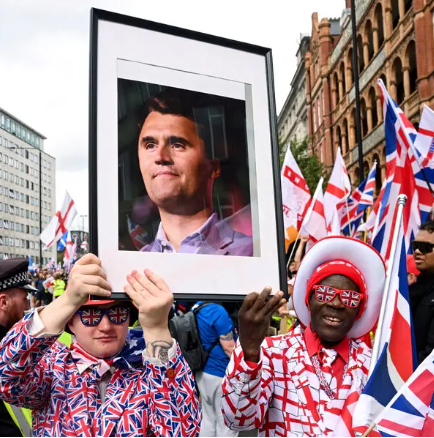
I would like to think that if Charlie Kirk were alive today, he would support this message because he stood for fairness, justice, and everything that was godly and good. These are Godly principles.
What happened to the world where our world was led by God and people placed their hand on a Bible, swore to tell the truth, and possessed a genuine fear of God that prevented most people from lying in His presence? Today, many people speak God’s name without any fear, reverence, or respect for Him at all. If they have no fear or reverence for God, how can we expect them to have respect for human life, justice, or the rights of others?
Juliet.


Leave a Reply