This was a love worth risking everything for, a love they tried to undermine and erase. It was our lifeline and how we found the courage to stay. This is our story, not theirs…

Song of Songs 2:10
Come then, my love, my darling, come with me.
The winter is over; the rains have stopped;
in the countryside, the flowers are in bloom.
This is the time for singing;
the song of doves is heard in the fields.
Figs are beginning to ripen;
the air is fragrant with blossoming vines.
Come then, my love, my darling, come with me.
This is another long one, so settle in with a cup of tea and coffee and take your time with it. It includes a lot of information with dates and also a sample of one of my letters to Robert’s attorney.
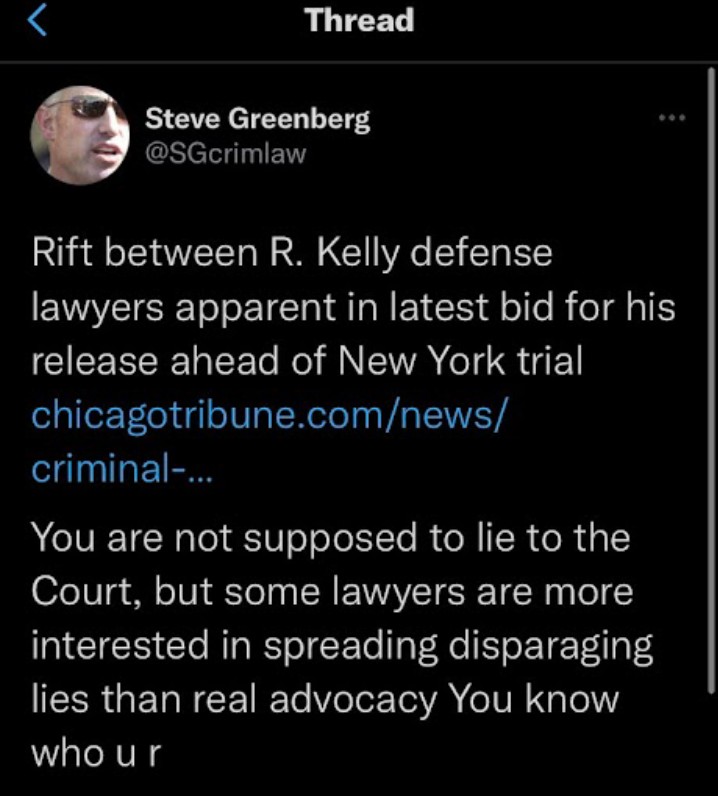
For the sake of not having to rewrite all their names over and over again, I may sometimes refer to them in abbreviations. Just note that SG refers to Steven Greenberg, AC refers to Azriel Clary, JS refers to Joycelyn Savage, and JB refers to Jennifer Bonjean.
I honestly don’t even know where to begin with this post. This part of our story has been, by far, one of the most heartbreaking. First, let me say that there is no way I can fully cover everything that has happened with his attorneys from 2019 to today, or the negligence, ineptness, and unethical behavior shown by almost all of them. I say “almost all” because there was one exception in my personal view — and I will explain who that was and why as I go along.
For now, I want to focus on the most damaging negligence: the negligence that affected Robert and me personally, shaped the public’s perception of his guilt, and distorted how people saw me. I intend to use this blog as a reference for the federal investigations we are demanding — including investigations into his attorneys by the appropriate authorities and the American Bar Association. I’ll try not to ramble, but when you understand how this information will be used, I hope you’ll forgive me if I drift at times.

I am not posting this to dredge up the past for the sake of it. What’s done cannot be undone. I am sharing this for those who sincerely want to understand what was happening behind the scenes with us — at least in the beginning.
To understand why Robert ended up with such a long list of negligent and inept attorneys, you need the backstory. Being in the music industry, Robert has always had attorneys around — mostly to handle ongoing disputes, industry contracts, and questionable cases that came his way. But these were not the types of attorneys you would ever take into a major criminal trial. Unfortunately, Robert didn’t realize that.


Robert does not have a college degree in law, nor a deep understanding of law or industries outside his expertise — and most people don’t. His situation is further complicated by dyslexia, which makes reading difficult. His own attorneys mislabeled him as “illiterate,” portraying him as lazy about learning to read, poor, ignorant, and even intellectually impaired. This was false and damaging. That narrative began with SG and continued when JB brought in a psychologist to test Robert’s IQ at the height of extreme, excruciating stress.
Anyone who understands IQ testing knows that memory and intellectual performance are impacted by stress — the higher the stress, the greater the impairment. On top of that, IQ testing was never designed with dyslexic individuals in mind. Dyslexia affects how letters and numbers are processed — it does not reflect intelligence. Many great minds throughout history were dyslexic — Albert Einstein, Steve Jobs, Richard Branson. Scientists are still studying why dyslexia is often linked with creativity and advanced problem-solving.
IQ tests simply are not conclusive — especially when extreme stress and disability are factors.
Personally, I was three-quarters of the way through my Health Science degree when I had to take a break because of the overwhelming stress of everything Robert and I were dealing with. I had previously ranked in the top 1% out of 1,100 students, and throughout my studies in art, marketing, and science, I consistently earned high distinctions. Suddenly, my memory felt like it stopped working. I struggled to recall material I had always retained easily. I believe it was PTSD — something both Robert and I experienced because of the lies, injustice, slander, and our long separation.
I was studying in Australia when Robert was arrested. Then COVID hit, and the Australian government closed the borders almost completely. I had been considering transferring my studies to the U.S. or at least traveling there to be immediately by his side — and then everything shut down. Meanwhile, Robert’s attorneys, led by Steven Greenberg, were behaving not much better than the fanatics attacking him. The level of narcissism was astonishing.

I couldn’t get through to Steven Greenberg. In my opinion, he was senseless and foolish. I begged him to stop feeding the false narrative that Robert was in a relationship with interns, Azriel Clary and Joycelyn Savage. He refused. He seemed determined to destroy everything — arrogant, narcissistic, and self-aggrandizing.
Robert hired Greenberg because he trusted the “Super Attorney” image advertised online and believed familiarity meant reliability. To me, Greenberg is not intelligent — but like many incompetent yet strangely successful people, he could charm others at first.
One of Robert’s greatest vulnerabilities is that he struggles to see through charm when it masks dishonesty or manipulation. And I understand why. When you are genuinely kind, hardworking, loving, capable, and God-fearing, it’s difficult to imagine others acting with deception or malice.
It was Greenberg who recommended Darrell Johnson — now a convicted fraud — as a “crisis manager.” Robert was isolated, betrayed, and desperate to know whom he could trust. He assumed an attorney’s referral meant safety. He did not know Johnson had no crisis-management experience and a history of alleged fraud.
Johnson arranged the Gayle King interview. Gayle was recorded backstage reassuring one of the worst conspirators (Lisa Van Allen; see my post about the evil tape for more about her) that “Robert would be going down.” Her tone was accusatory. The interview became an ambush. Robert’s words and emotions were twisted and mocked. Oprah later joked about the interview publicly with Reese Witherspoon and others, as if his pain were entertainment.
Media outlets twisted Robert’s words to falsely suggest that Azriel and Joycelyn were his girlfriends. In truth, he said they were “almost like” girlfriends — meaning not girlfriends at all (well, that’s what he was saying). Even I misunderstood at first, believing he had lied. because I knew that there was no relationship between him and them. That they were like employees (interns) there to learn about the music business, to help make bookings and get coffees. I later realized how badly the clip had been misunderstood and why he put it in those terms. He felt like he had no choice. If he said that they were interning, no one would believe him, and in fact, the two women may hate him, denying them. Especially as they had refused up to that point to take part in the conspiracy. I think they were really hoping for something to eventuate from Robert’s vulnerable position of being left alone by so many. But like AC said, “he was never interested, no matter what she tried.”
Greenberg then ran to the media, insisting that Robert had a “long-term, loving, live-in relationship” with the two women — lies that placed Robert in danger.
He continued building on those lies — and eventually began putting those false statements into Robert’s court motions without Robert’s knowledge or consent.
Our relationship becoming official — and the battle intensifying

After the Gayle King interview, our relationship deepened quickly. Eventually, I finally said the words Robert had been waiting months to hear: that I wanted to be with him. I had kept him in the “friend zone” out of fear of the overwhelming emotions I was feeling, which scared me. It was an intense, rich, deep, and intense love that was growing between us. A pure, magical, delicious, beautiful, and mystical love. When I finally said yes, “I want to be with you” — in April 2019 — our relationship became official. I still count that month as our anniversary.
From that moment, it was immediately “boots on the ground.” We rolled up our sleeves and tried to work together for his defense — despite me still being in Australia, which made everything harder.
When Robert was arrested in New York in July 2019 and denied bond, we were naive. We thought this would be over quickly, and we’d go back to being in love and building our life together. We never anticipated Judge Ann Donelly repeatedly denying release, or the “Mute R. Kelly” movement influencing companies to cancel his appearances and tours — including his planned Australia tour — before trial, stripping away the presumption of innocence.
I wrote Robert constantly, praying God would help him read my letters. I shared spiritual and legal strategies — anything I thought might help. But the biggest immediate threat, in my view, was the continued presence of the two infatuated interns.
Once we became official, I told Robert clearly: I would never be comfortable with other women being linked to him — especially when the world believed they were his girlfriends. I understood he was trying to protect them from abusive families and public pressure, but as a couple, we could not function while that lie continued. Robert agreed — and sent the women home around May 2019, knowing the risk involved. Later, reports surfaced that they were in shelters, and their families confirmed them being home online.
But when Robert was arrested again in July and denied bond, everything became complicated. Greenberg continued publicly portraying the women as his “live-in girlfriends” even though they were gone, feeding the narrative that incriminated Robert by assumption.
Robert was overwhelmed, unable to track everything his lawyers were saying, so I tried to alert him to the false statements. I worried that the perception of him supporting two much younger “live-in girlfriends” would reinforce accusations of control — instead of what was really happening: he had supported them so they would have their independence from their families and be free from their abuse and also not be manipulated into lying against him.
I also knew how the public — and the law — views polygamous-type relationships. How could an attorney possibly argue that as a defense?
While Robert was being held in New York, SG and other attorneys began publicly elevating the interns from “assistants” to “live-in girlfriends.” I could barely reach Robert. Somehow, members of his camp moved the women into his Trump Tower condo for the very first time — despite them previously living elsewhere (in their own apartment) — because they were now nearly homeless and under immense pressure from family and prosecutors.
Robert, trapped and targeted, felt he had almost no choice. I supported him emotionally, knowing the psychological manipulation he was facing — but still searching desperately for a way to end the lie.
When I approached Greenberg, explaining that I was Robert’s actual partner and willing to testify, he dismissed me completely. The tipping point came when an obsessed male fan asked Greenberg who I was — and Greenberg replied that Robert’s private life was “none of his business.” That comment fueled more false rumors and attacks against me.
Communication between Robert and me was painfully slow because I was still stuck in Australia under lockdown. Letters took nearly a week. Meanwhile, Greenberg kept filing motions referring to Azriel as Robert’s “live-in girlfriend,” making Robert fearful and cautious. He knew me — and I knew him — but we had to survive the storm quietly.
He was trying to survive in a situation where it seemed like everyone wanted him gone. Some people resented him because they couldn’t control or possess him in real life; others were deeply jealous of the man he was, and others simply hated him because they believed the lies and thought he was some kind of monster.
So I put myself aside — my dreams, my plans, my own needs — and decided the most important thing was helping the man I loved keep living, surviving, and breathing another day until we reached a point where it was finally safe enough for him to explain the truth. Robert was extremely cautious. That meant he could not let anyone know that I was his partner and girlfriend. He simply couldn’t risk his life — or ours — any more than he already had. If the prosecution discovered his attorneys had lied, they would weaponize it just like they were using everything else against him. And if the two women found out, in their fragility and obsession, they might turn against him out of entitlement and immaturity — as Azriel eventually did.
There were so many moments when it seemed like the time to tell our story had come — and then passed — over and over again. I wanted to help him break free from the lie about the “interns,” and from the pressure of having to keep living that lie. I advised Robert to remove them from his condo and to stop any financial support, because under the circumstances, it felt like emotional leverage — even blackmail. Robert risked his life yet again and did exactly what I asked. Both women left, and although they still publicly supported Robert, AC began taking it too far — enjoying the attention and encouraging the public to believe she was his girlfriend rather than his employee.

So I approached Azriel online, through Twitter, and explained who I was. At the time, she was constantly making videos that fed into the fantasy that she was truly Robert’s girlfriend. I shared with her intimate knowledge about her that only Robert would know, so she would know I wasn’t lying. I believed that freeing him from that lie was the only way to truly help. But only two days after I approached her, she released her first video, crying and accusing Robert of abuse. Then came another video where she destroyed his clothes on camera and said he had lied to her. I felt sick. After everything Robert had risked — his freedom, his safety, his peace — for our relationship, I felt like I had somehow ruined everything and hurt him. But I also knew I had tried to help, and that telling the truth was necessary if I was ever going to stand as a witness to his innocence.
Around this same time, Greenberg filed another request for bond and — without Robert’s permission — wrote that Robert would be willing to live with Joycelyn Savage to prove he wouldn’t be a danger to anyone. I was furious. Not only did this expose Robert to more possible false allegations from her family, but it could also have trapped him in a situation he would have emotionally loathed. Imagine being deeply in love with someone across the ocean, but being forced by law to live with someone you would rather never see again — someone whose family and lies helped create the nightmare you’re in. Knowing she was infatuated while you didn’t feel the same, yet being expected to pretend just to keep the peace. That was the future Greenberg was preparing for him.
I told Robert clearly that her name had to be removed from the motion. Somehow, by the final filing, it disappeared. I still couldn’t understand how an educated attorney could believe a biased judge and public would think that Robert living with someone he was accused of controlling would help prove his innocence. I even reached out to Greenberg myself, insisting he should have listed me on the motion. I was his real partner — an independent, highly educated 43-year-old woman — and no one could reasonably see me as a threat. It would have supported the truth, not undermined it. But he ignored me again. Robert was becoming extremely frustrated with both Greenberg and Leonard. They weren’t sending him his own motions; they weren’t involving him in his defense, and the trial was approaching fast.
On top of that, the lies about his relationship status were everywhere. It became clear: it was time to let those attorneys go. I told Robert directly that he needed to get rid of them — and he did.
Enter Cannick, who would become the rare exception to the long line of unethical and ineffective attorneys.
Deveraux Cannick was the attorney Robert hired to replace Steven Greenberg and Michael Leonard. When Cannick came on board, he had barely two months to prepare for trial and was immediately faced with an overwhelming volume of falsified and corrupted discovery material. We prayed he would somehow be able to get through it all, but access to Robert was limited, and the task of catching up on everything he needed to know was immense.
At first, I deliberately stepped back and left Mr. Cannick to do his work. I did not want to appear — as some had already suggested — “desperate for validation or recognition.” More importantly, I trusted Robert to communicate with his attorney in the way he believed was most effective. That is one of the defining qualities of a healthy relationship: not just unity, but boundaries — and respect for each other’s judgment, competence, and capabilities.
Robert and I were a team, even across distance. And despite everything, it was still a powerful team. During this time, I encouraged Robert constantly. We were, perhaps naively, full of hope that a jury would see through the fabricated and ever-changing stories — stories with no consistency, no dates, no detail, and no substance. We genuinely believed the system would eventually correct itself. And we trusted Mr. Cannick.
That may sound unreasonable considering everything we had already endured, but without hope, we would have collapsed under the weight of the despair surrounding us. Mr. Cannick gave us that hope. He had experience with civil-rights-type cases, which Robert’s case truly was. He was sincere, uninterested in media attention, and openly guided by his Christian faith. There was a noticeable difference in his character and approach.
During the trial, several things occurred behind the scenes that would later prove consequential. Around that time, I came across a video of Judge Ann D. recounting a case in which she discovered a man had been railroaded by the system and falsely accused of a crime he did not commit. She described how, once she received evidence of his innocence, she took action to ensure he was set free. Watching that, I allowed myself to believe — perhaps for the first time — that she might not be as compromised as we all feared. That she might ultimately act with integrity if the truth were placed before her.
I did not know then that this moment would mark the beginning of a five-year journey of communication that would ultimately be wasted.
I can’t explain every detail of everything that took place. This is simply a summary; I will leave the full details for another time. But from the very beginning, I had a kind of revelation — a prophecy, if you will. I have always had certain spiritual gifts, and they became heightened around the time Robert and I met. It felt almost as though God knew we would need extra guidance and support. The message I received was incredibly clear, and one day, those who doubt me can ask Robert about it. I told him that somehow, someway, he would be granted “clemency” by someone with significant authority.
At the time, we had both completely forgotten about this revelation. But during the trial, I wondered if Judge Ann.Donnely. might be the person it referred to. I wrote to her, explaining who Azriel Clary really was — a fraud and charlatan, acting out of revenge. I shared private details about our relationship, everything I knew about Robert, and the larger conspiracy that needed investigation. I outlined all of the evidence of corruption that was available. I gave it my all in faith, fully believing that any honorable and principled judge would follow up with Robert, his new attorney, and me.
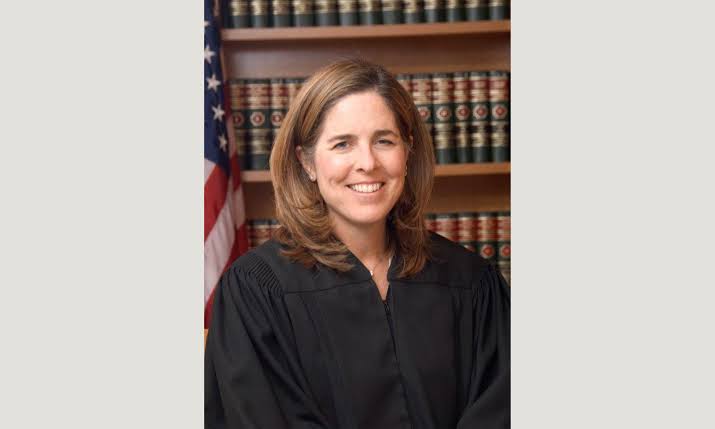
Unfortunately, nothing came of it. I had revealed how his previous attorneys had misrepresented AC and JS to the court, and so much more. The evidence was beyond contestation. I had faith that justice would prevail, but in reality, I was unintentionally giving Robert false hope. At the time, I truly believed Judge A.D. was the powerful person who could grant him clemency. I had no understanding yet of the role an American President could play in pardons. By then, President Trump was no longer in office and was himself facing fabricated cases and persecution from some of the same characters, including Michael Avenatti and New York’s DA.
Still, I had to try everything I could. In my mind, a judge motivated by honor would gain little from a conviction and would act based on truth. I was naive and far too trusting. I hadn’t researched Judge A.D.’s background or the reviews highlighting her consistent bias, particularly in favor of women. I was unaware of her daughter’s connection to the documentary or the fact that her daughter had a fascination with murder and crime stories. Those small details painted a picture of a woman who, perhaps, was just another narcissistic personality type. Seeing her daughters’ morbid fascination with crime stories made me question what kind of woman Judge A.D. really was. It became apparent that she was not the person who would help Robert — and, in fact, she did nothing close to it.
I also knew Robert needed my help in explaining our relationship to Mr. Cannick. Not everyone, including some of his previous attorneys, believed him. Stepping in was the least I could do, especially since I couldn’t travel to New York due to Australian border closures. So I wrote my first letter to Mr. Cannick. It was awkward, and I wasn’t sure how he would take it — the trial had already started by then. The letter introduced me as Robert’s partner, his real and only girlfriend. Robert confirmed everything I shared with him. In that email, I also asked Mr. Cannick not to refer to AC or JS as Robert’s girlfriends, past or present, or to insinuate that any kind of relationship had ever existed between them.


Mr. Cannick, honorably and at Robert’s direction, obliged. JS was removed as a witness entirely — though some people were upset about this, it was exactly why. Furthermore, Cannick went a step further, stating explicitly that the defense “would not suggest that there was a sexual relationship between AC and Robert.” That was the clincher for me. Finally, someone was hearing us, truly listening — even if it was very late.
Cannick had taken over the case from SG, who had essentially briefed him on the prior defense strategy. Cannick could have followed the same playbook, but he chose to go in a different direction based on what we disclosed to him. This is a part of the story I have never published before, but now I hope people understand why I say he was the only attorney of Robert’s I truly respect. He represented Robert as the man he actually was — not like Greenberg, who slandered him to the media and on social platforms, portraying him as difficult, whiny, and problematic. Cannick believed in Robert.
I sincerely wish, with all my heart, that we could have stuck with him. But at the same time, I fully trust God’s plan in guiding us down another path that ultimately led us to where we are today. I will not go into the story of JB’s entry into this in this post — stay tuned for my next post, where I will continue this story.
J.
 Love Through Fire...
Leave a comment